Abhyanga: How to Do an Ayurvedic Self Oil Massage at Home
Abhyanga is a warm-oil self massage from Ayurveda; this guide covers the steps, the oil for each dosha, how often to do it, who should take care and what studies show.
Key takeaways
- Abhyanga means massaging the whole body with warm oil, usually before a bath.
- Sesame suits vata, coconut or sunflower suits pitta, and a light oil like sunflower suits kapha.
- Ayurvedic teachers suggest daily practice or a few times a week, on an empty stomach.
- Studies are small. They suggest less stress and some benefit for stiffness, but they cannot separate the oil from touch and warmth.
- Test a small patch first, and ask your doctor if you are ill, pregnant or have a skin condition.
Abhyanga at home, step by step
You need
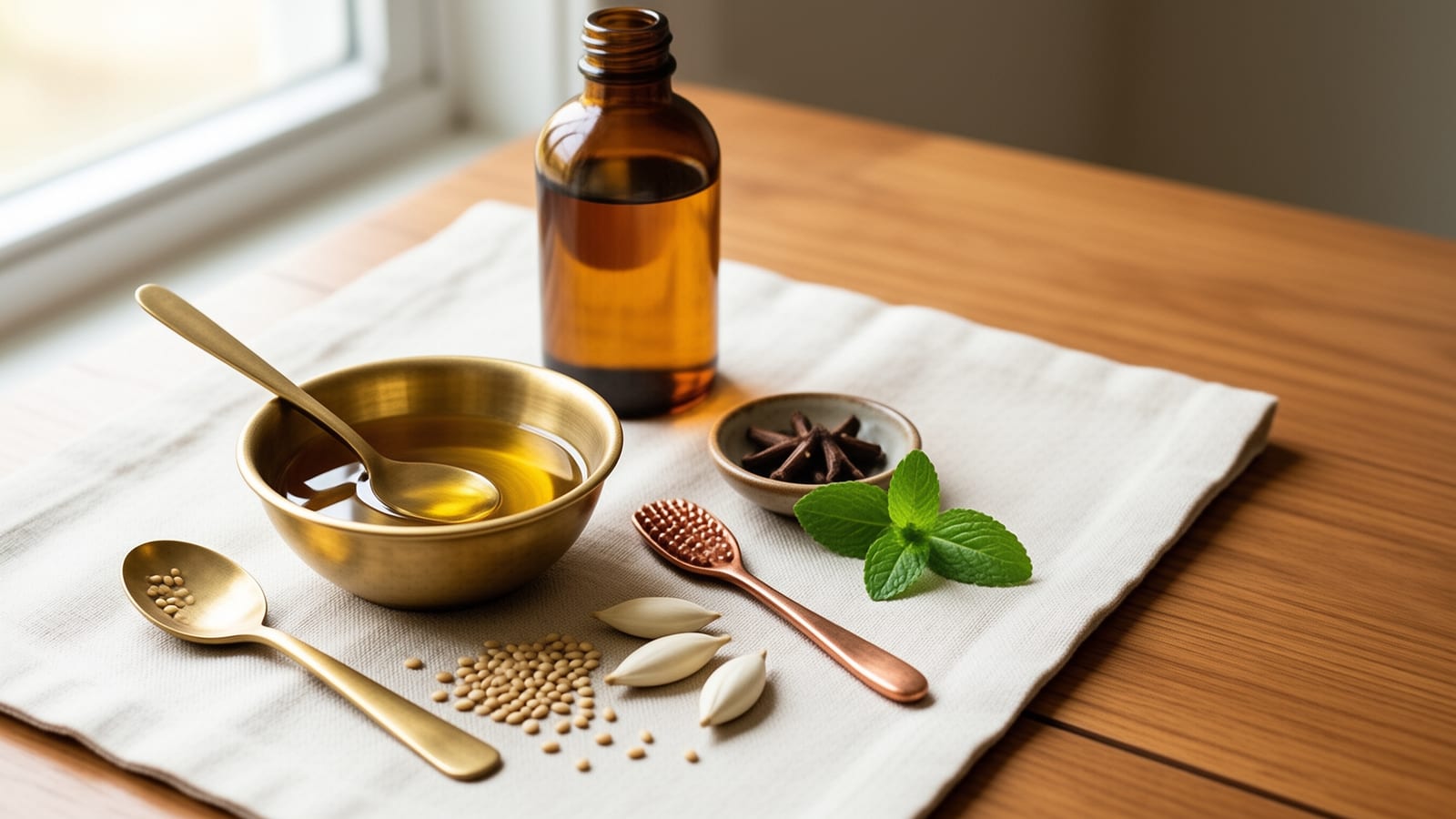
- Oil that suits you: sesame for vata, coconut or sunflower for pitta, a light oil such as sunflower for kapha
- A bowl of hot water to warm the oil in
- An old towel and clothes you do not mind oiling
- A gentle cleanser for the bath
Method
- Choose an empty stomach, or wait at least 2 hours after a meal.
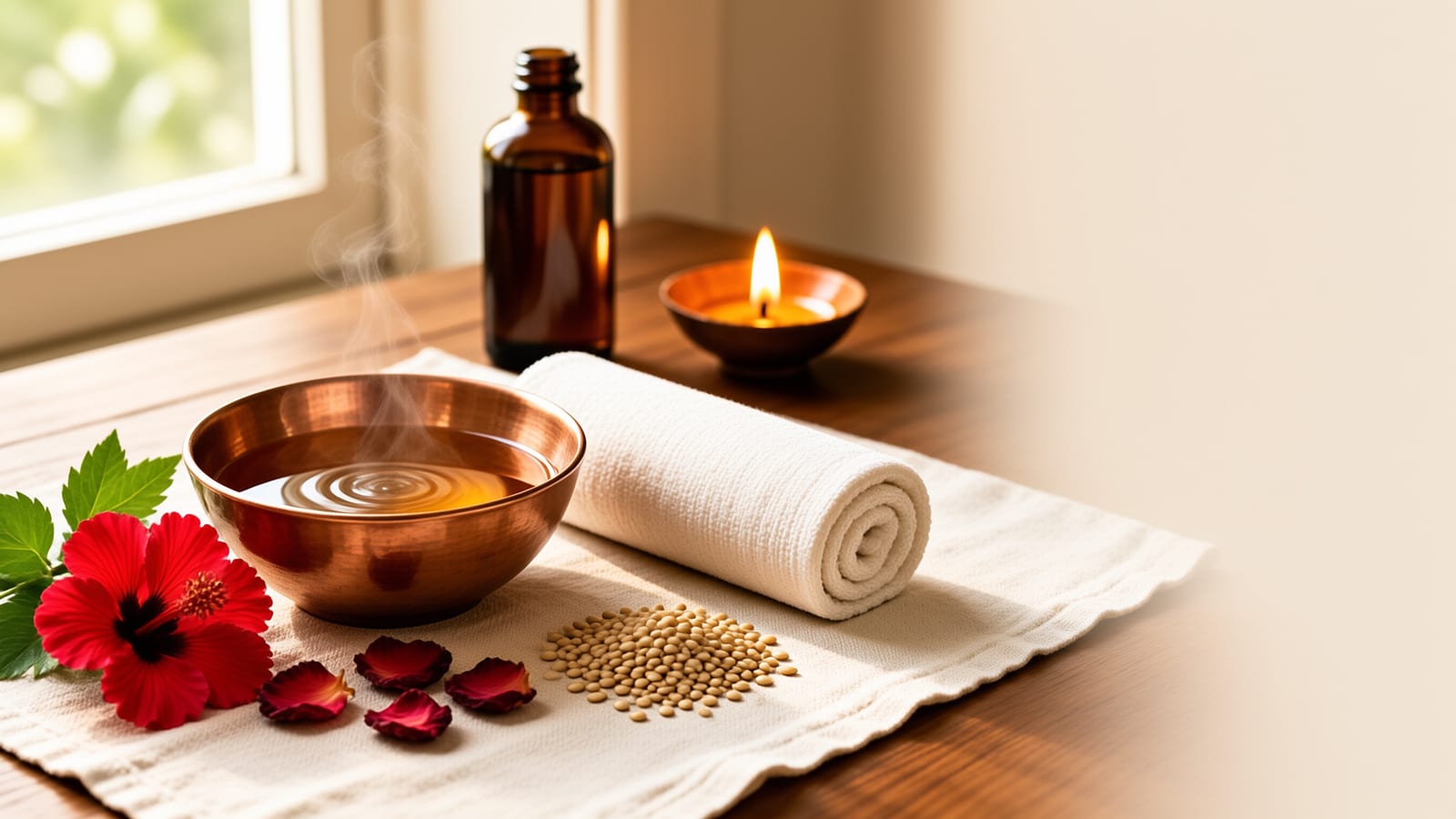
- Warm the oil by standing its bottle or bowl in hot water. It should feel comfortable on the skin, never hot.
- Pour a little oil into your palms and rub them together.
- Start with the feet. Massage soles, tops, toes and ankles in circles.
- Massage the legs in long strokes upward, toward the heart, with circles at the knees.
- Do the hands and arms the same way, rubbing each finger and circling at the elbows.
- Massage the chest and belly in gentle circles. Follow your large intestine on the belly: up the right side, across, and down the left.
- Massage the neck and shoulders gently, then rub a little oil into the scalp with your fingertips.
- Rest for 15 to 20 minutes with the oil on.
- Bathe in warm water with a gentle cleanser, dry off and stay warm.
On this page (6 sections)
Dry skin, stiff joints, a restless mind at bedtime: many of us feel these at the end of a long day. Ayurveda has an old habit for this, which is to massage the whole body with warm oil. It is called abhyanga. Daisy has an oiling playlist on her channel that covers it, and she uses oils in several of her own routines. This guide explains how to do it at home, how to pick your oil and what research says.
What is abhyanga?
Abhyanga is a self oil massage, done with warm oil from head to toe. Vaidya Vishwanath Guddadar of Kottakkal Ayurveda calls it a core part of dinacharya, the Ayurvedic daily routine. It is usually done before a bath, so the oil sits on the skin for a short time first.
Ayurveda sees it mostly as a way to calm vata. Vata is the dosha of air and space. It governs movement, circulation, elimination and nerve impulses. When vata is high, Ayurveda expects dryness, constipation and anxiety. Warm, heavy oil is the opposite of those qualities. That is the logic behind the practice.
Kottakkal lists what Ayurveda expects from regular abhyanga. These include better circulation, nourished skin, supple joints and muscles, and a calmer nervous system. The same page says its effect on eyesight is only believed, and that more research is needed. Treat these as traditional claims, not proven results.
Which oil for which dosha?
The California College of Ayurveda matches oils to the three doshas, which are body-mind types. Use this as a starting point, not a rule.
- Vata (dry, cold, light): a heavy, grounding oil such as sesame or almond. Use plenty, keep the room and oil warm, and use slow, smooth strokes with some depth.
- Pitta (hot, sharp): a cooling oil such as sunflower, coconut or olive. Use a moderate amount with soft strokes and moderate pressure.
- Kapha (heavy, cold, oily): lighter oils such as safflower, mustard or sunflower. Kapha types need the least oil. Faster, lighter strokes help, and dry brushing before the oil is also suggested.
Medicated oils are a step further. Kottakkal lists Kshirabala as a nourishing oil for vata and pitta, and Mahanarayana and Dhanwantharam for vata. In her nasya video, Daisy describes Kshirabala as heavy and grounding, and best for dry, anxious body types. She links the more concentrated Kshirabala 101 below. Choose medicated oils with an Ayurvedic doctor.
If you are unsure of your dosha, begin with a small amount of plain sesame oil, the classical base. Watch how your skin feels the next day. Soft skin and an easy mind are good signs. Heat, itching, heaviness or a blocked feeling mean you should switch to a lighter oil or use less. Raise the amount slowly over a few sessions.
How to do it and how often
The routine card above gives the order. Schools differ in small ways. Kottakkal starts at the feet and moves up. The California College suggests vata types start near the head and work down. Both agree on warm oil, a warm room and an unhurried pace. Do not rush the strokes, and use gentle pressure over tender joints.
Kottakkal suggests an empty stomach, or at least 2 hours after a meal. It suggests daily practice or a few times a week. After the bath, stay warm for a few hours. Wear old clothes while the oil is on, and take care on a slippery bathroom floor.
Nasya, putting oil in the nose, is a separate practice with its own article on this site.
Who should be careful?
Test a small patch of skin first. Sesame oil can rarely cause an allergic skin reaction. A case of allergic contact dermatitis from sesame oil in a topical medicine has been reported. Stop if you get redness, itching or a rash.
If you are ill, pregnant, have a skin condition or take medicine for a long-term problem, ask your doctor or an Ayurvedic doctor first. Keep your doctor in the loop.
What research says
Research on abhyanga is early. A small pilot study in Germany gave 20 healthy adults a one-hour Abhyanga massage. Stress scores and heart rate fell afterwards. Blood pressure fell only in people with prehypertension. There was no comparison group.
A 2026 randomised trial from Kerala gave 42 male students stretching, with or without sesame oil self-massage of the legs, for 4 weeks. Those who massaged improved more in hamstring flexibility and stiffness. A 2026 review of Ayurvedic sleep treatments notes that abhyanga and shirodhara are linked with favourable changes in the autonomic nervous system and brain waves. It adds that the trials are small and short, and that the effects of warmth, touch and attention cannot be separated from the oil itself.
Daisy’s tips
- In her nasya video, Daisy says to judge any oil by comfort. If your body feels discomfort, use less or switch to a gentler oil.
- She favours plain sesame oil for nasya, and Kshirabala for dry, anxious types.
- In her morning routine video, she says she keeps most of her skin care for bedtime, because she finds what she applies at night absorbs better.
- In her skin elixir video, Daisy massages a castor oil based face oil in at night. She covers the pillow with plastic under a satin cover, washes it in hot water and replaces it every 3 to 4 months. She says it may not suit oily skin, and that it takes time. She saw changes over about 2 to 3 months.
Daisy talks about these oiling practices in the videos below.
Questions people ask
Which oil is best for abhyanga?
Sesame is the classical choice and suits vata. The California College of Ayurveda suggests sunflower, coconut or olive for pitta, and safflower, mustard or sunflower for kapha. Medicated oils like Kshirabala are best chosen with an Ayurvedic doctor.
How often should I do abhyanga?
Ayurvedic practitioners such as Vaidya Vishwanath Guddadar of Kottakkal say daily, or a few times a week. Choose a pace you can keep. A short massage you repeat beats a long one you skip.
Should I do it before or after a bath?
Before. Massage, rest for 15 to 20 minutes with the oil on, and then take a warm bath or shower.
Can I do abhyanga on my face?
Daisy massages a face oil into her skin at night. Her blend is castor oil based and she says it may not suit oily skin. Try a small patch first.
Is there proof that abhyanga works?
Small studies show lower stress scores and some benefit for stiffness. A 2026 review says the trials are small and cannot separate the oil from touch, warmth and attention.
Further reading
- Basler (2011), Journal of Alternative and Complementary Medicine: Pilot study of Abhyanga massage and stress
- John et al. (2026), Frontiers in Sports and Active Living: Nitya-Abhyanga with stretching, a randomised controlled trial
- Vendrame and Chai (2026), Journal of Clinical Medicine: Ayurveda treatments for insomnia, a narrative review
- California College of Ayurveda: Abhyanga massage for each dosha
- Kottakkal Ayurveda, Vaidya Vishwanath: Abhyanga, Ayurvedic self-massage
- Oiso et al. (2008), Contact Dermatitis: Allergic contact dermatitis caused by sesame oil
This article shares Daisy's personal experience and traditional Ayurvedic knowledge for general information. It is not medical advice. Talk to your doctor before changing medicines or treating a health condition, and patch-test anything new on your skin. Read the full disclaimer.
Learn it with Daisy
New natural remedies and Ayurvedic rituals on her YouTube channel every week.