Copper Water (Tamra Jal): Benefits, Safety and Cleaning
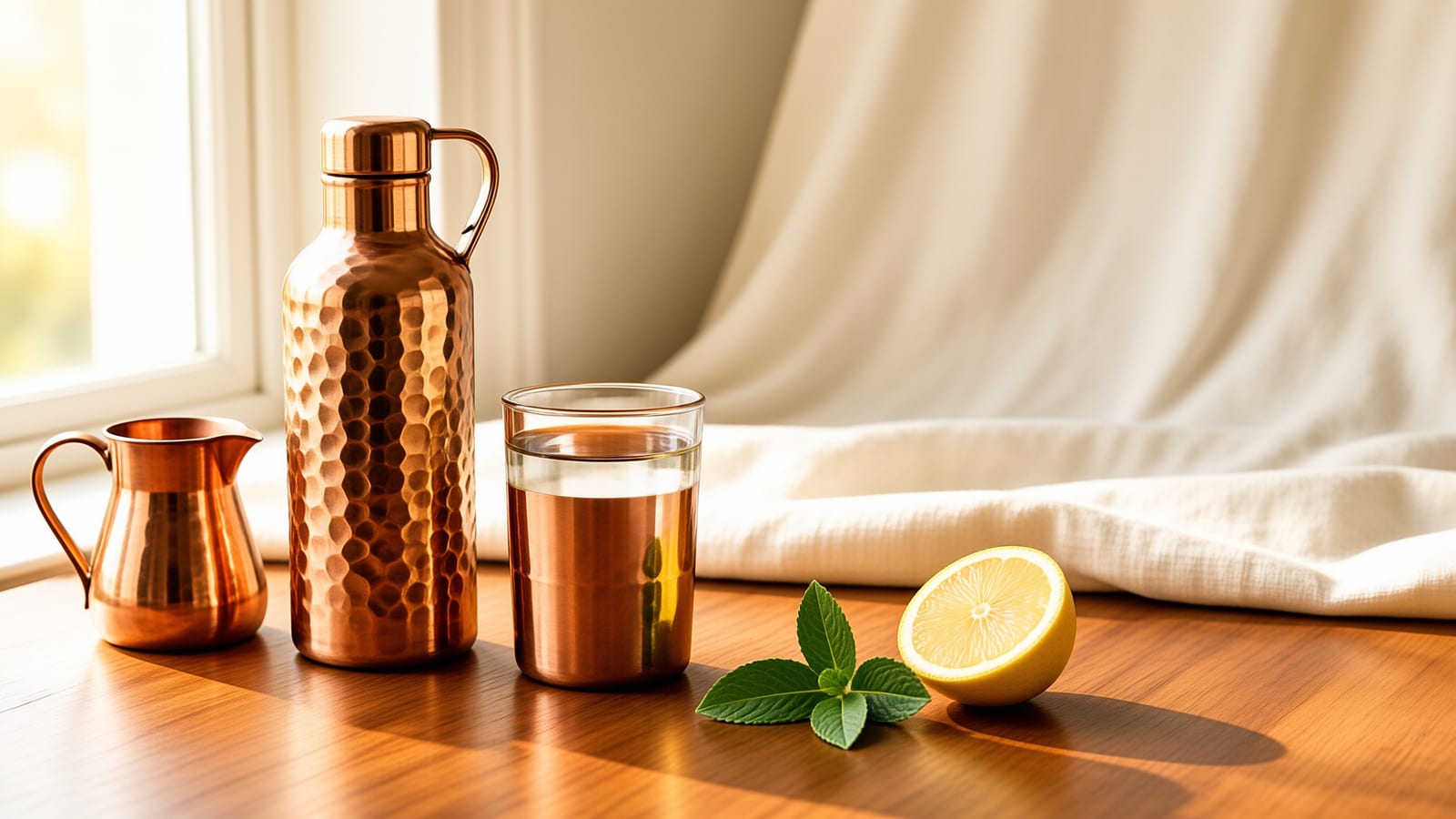
Ayurveda recommends water stored in copper, and lab studies show it kills germs, but copper is toxic in excess, so use plain water only and keep the bottle clean.
Key takeaways
- Ayurveda recommends storing drinking water in copper. This water is called tamra jal.
- Lab studies found that water stored in copper pots for 16 hours killed diarrhoea-causing bacteria.
- Those studies tested bacteria, not human health benefits such as iron levels or digestion.
- Copper dissolves into acidic drinks. Store plain water only, never lemon water, juice or curd drinks.
- Clean the bottle with lemon and salt, tamarind paste or vinegar, then rinse well. Daisy avoids detergent.
- People with Wilson disease, and infants, should not use copper vessels without medical advice.
How to clean a copper bottle
You need
- Lemon and salt, or tamarind paste, or vinegar (Daisy's options)
- Plain water for rinsing
- A soft cloth or sponge
Method
- Empty the bottle and scrub the inside and outside with lemon and salt, tamarind paste or vinegar.
- Rinse very well with plain water, so no acidic cleaner stays in the bottle.
- Dry the bottle, then refill it with plain water.
- Skip chemical dish detergents. Daisy says they leave the green residue she warns about.
On this page (8 sections)
Drinking water kept overnight in a copper vessel is an old Indian habit. Ayurveda calls it tamra jal. Daisy follows it, and so do many families. The practice is popular, but it comes with real safety limits. This guide covers what Ayurveda says, what studies show, and how to use and clean a copper bottle safely.
What is copper water (tamra jal)?
Tamra jal is plain water stored in a copper vessel, usually overnight or for several hours. “Tamra” is the Sanskrit word for copper. Ayurveda recommends copper for storing drinking water, as a 2012 Bangalore study notes.
The idea is simple. A small amount of copper dissolves into the water. Ayurveda treats copper as a good vessel for drinking water. Modern research has tested only part of that tradition.
How to use a copper bottle
Fill the bottle with plain drinking water and leave it to stand. The lab studies used 16 hours or overnight storage, so night-to-morning is a sensible window. Nobody has tested much longer than that, so refill with fresh water each day.
Drink it as you would any water. Daisy has hers first thing in the morning and says to keep sipping through the day if you can. Keep the bottle for plain water only. Wash it often, and do not leave old water sitting in it for days.
How Daisy uses it
Daisy drinks copper water first thing in the morning. She does this before brushing her teeth, a practice Ayurveda calls ushapana. She also uses the same copper water to make her fresh amla juice.
In her hair video, Daisy says copper helps the body release and absorb iron. She calls copper water a sure-shot way to raise iron, alongside lemon with meals and iron cookware. She also uses a copper tongue cleaner. These are her views and practices, not medical claims.
What research says
The strongest evidence is about germs. In a 2012 lab study, water contaminated with diarrhoea-causing bacteria, including cholera, was stored in copper pots for 16 hours. No bacteria could be recovered afterwards. The copper in the water was 177 parts per billion, within WHO limits.
These are lab tests on bacteria. We did not find trials showing that copper water raises iron levels, helps digestion or aids weight loss. So the iron benefit Daisy describes rests on tradition and her experience.
There is a real link between copper and iron, though. The NHS says copper helps trigger the release of iron to form haemoglobin, the substance that carries oxygen. It also says a varied diet should give you all the copper you need, with nuts among the good sources. A copper bottle is therefore an extra, not a necessity. If you worry about low iron, ask your doctor for a blood test.
Is copper water safe? Copper toxicity
Copper is a mineral you need in small amounts. The NHS says adults aged 19 to 64 need 1.2 mg a day. It adds that 10 mg or less a day from food, water and supplements is unlikely to cause harm. High doses can cause stomach pain, sickness and diarrhoea. Long-term excess may damage the liver and kidneys.
A single glass of plain water from a copper bottle is far below that. In the 2012 study, stored water held 0.177 mg of copper per litre.
A trial in 179 adults gave 200 ml of water with added copper. Nausea became clearly more common at 6 and 8 mg per litre. The researchers set 4 mg per litre as the level with no effect. Problems start when copper builds up or the water is acidic. Two groups need extra care.
- Wilson disease. MedlinePlus describes this as a genetic condition in which the body cannot clear extra copper. If you have it, avoid copper vessels unless your doctor says otherwise.
- Infants and young children. A 1994 Lancet paper notes that Indian childhood cirrhosis is generally believed to come from excess copper in milk boiled in copper vessels. Ask your paediatrician before using copper for a child.
If you take medicine for a liver or kidney condition, keep your doctor in the loop.
Never use copper for acidic drinks
Acid pulls copper out of the metal. The US FDA Food Code says copper and its alloys, such as brass, may not touch food with a pH below 6. Its examples are vinegar, fruit juice and wine. It adds that high levels of copper are poisonous and have caused food poisoning.
So keep lemon water, juice, tamarind drinks and anything sour out of the copper bottle. Daisy uses copper water as the base for her amla juice. That is different from keeping the juice in copper. Use plain water only, and refill it fresh each day.
How to clean a copper bottle
Daisy says a green layer called patina forms when copper is not cleaned properly. She advises cleaning with lemon and salt, vinegar or tamarind paste. She says chemical detergents leave a residue that makes the bottle toxic.
Rinse well after cleaning. The acid you scrub with can sit in the bottle, and acid pulls copper out. Dry the bottle and refill it with plain water.
Daisy’s tips
- Drink the water first thing in the morning, before brushing.
- Clean the bottle with lemon and salt, vinegar or tamarind paste, not detergent.
- Add fresh lemon to your meals. Daisy says it helps iron absorb.
- Pair copper water with iron cookware, as she does.
- Use the water, not the bottle, to make amla juice, as she does.
- Do not copy her routine blindly. She says to adapt it to your body and health.
Watch Daisy’s full morning routine in the video below, where she shows her copper water and how it fits her day.
Questions people ask
What is tamra jal?
Tamra jal is water stored in a copper (tamra) vessel. Ayurveda recommends copper for storing drinking water, according to a 2012 study from the Institute of Ayurveda and Integrative Medicine in Bangalore.
Is it safe to drink water from a copper bottle every day?
For most healthy adults, copper from stored plain water is low. In a lab study it stayed within WHO limits. The NHS says 10 mg or less of copper a day from food, water and supplements is unlikely to cause harm.
Can I put lemon water or juice in a copper bottle?
No. The US FDA Food Code says copper must not touch food with a pH below 6, such as vinegar, fruit juice or wine, because the acid pulls copper out. Store plain water only.
How long can water stay in a copper bottle?
The studies we opened tested 16 hours or overnight storage. They did not test longer. Refill with fresh water every day.
Who should not use a copper bottle?
People with Wilson disease, in which the body cannot clear extra copper, should avoid it unless a doctor says otherwise. Ask a doctor before using copper vessels for babies and young children.
Further reading
- Sudha et al., 2012: Storing drinking-water in copper pots kills contaminating diarrhoeagenic bacteria (J Health Popul Nutr)
- Araya et al., 2001: Determination of an acute no-observed-adverse-effect level (NOAEL) for copper in water (Regul Toxicol Pharmacol)
- NHS: Others, including copper
- US FDA Food Code 2022 (section 4-101.14, copper and acidic food)
- MedlinePlus: Wilson disease
- Scheinberg and Sternlieb, 1994: Is non-Indian childhood cirrhosis caused by excess dietary copper? (Lancet)
This article shares Daisy's personal experience and traditional Ayurvedic knowledge for general information. It is not medical advice. Talk to your doctor before changing medicines or treating a health condition, and patch-test anything new on your skin. Read the full disclaimer.
Learn it with Daisy
New natural remedies and Ayurvedic rituals on her YouTube channel every week.