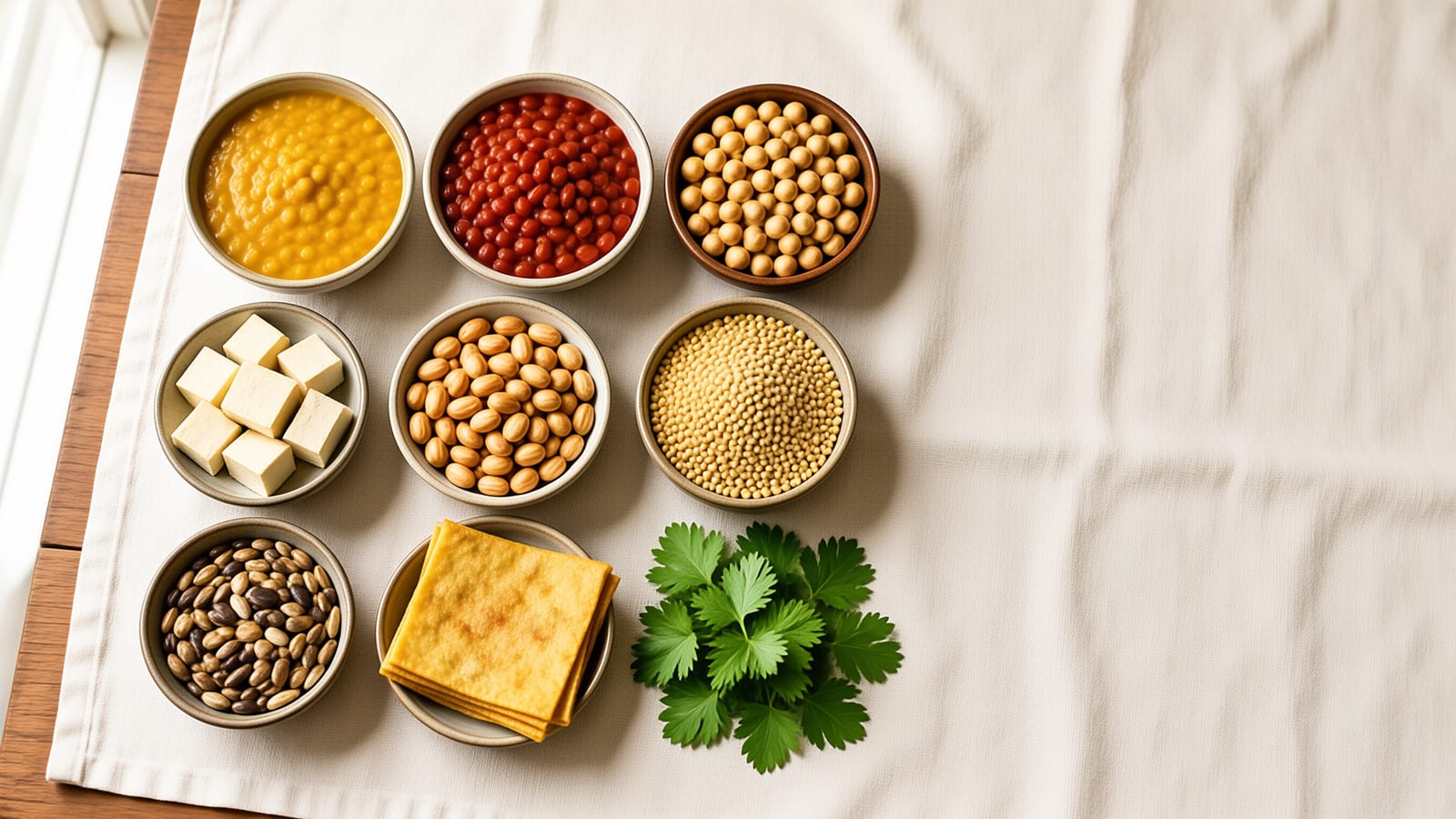
Healthy Coffee Substitute: Daisy's Chicory and Dandelion Blend

Prefer to watch? Open the full video on YouTube.
Daisy quit caffeinated coffee and now brews a roasted blend of chicory, chickpeas, dandelion, reishi, date seeds and barley that tastes like South Indian filter coffee.
Key takeaways
- The blend has no coffee beans: chicory, roasted chickpeas, dandelion root, reishi, date seeds and barley.
- Daisy says it tastes like strong South Indian filter coffee but calms her instead of making her jittery.
- She says chicory feeds gut bacteria, and dandelion supports the liver and digestion.
- Roast the chickpeas, date seeds and barley dark, then grind them very fine.
- Brew it in a filter or stir it into milk and strain it, then add milk and sweetener as you like.
- Daisy says it may not suit very thin, restless vata body types, because the roasted ingredients can aggravate them.
Daisy's chicory and dandelion coffee powder
You need
- 70 g chickpeas, dry roasted until dark brown and powdered
- 70 g chicory powder
- 20 g dandelion root and reishi mushroom powder mix, dry roasted briefly
- 20 g date seeds, dry roasted and powdered
- 15 g barley, dry roasted until dark brown and powdered
- Milk and sweetener, optional, to serve
Method
- Dry roast the chickpeas until dark brown. Dry roast the date seeds and the barley (dark brown) in the same way.
- Dry roast the dandelion and reishi mix for a while.
- Powder the roasted chickpeas, date seeds and barley together. Make it a very fine powder.
- Mix in the chicory powder and the roasted dandelion and reishi mix.
- Make a decoction in a traditional Indian coffee filter or a gas filter. Or stir the powder into hot milk like instant coffee.
- If you mix it into milk, strain it through fine muslin or a strainer to remove the sediment.
- Drink it black, or add milk and sweetener. Whirl it in a frother if you like.
On this page (8 sections)
Many people try to quit coffee and go back within days. The taste and the morning ritual are hard to give up. Daisy says she quit and returned to caffeinated coffee many times, until she built a blend that tastes like coffee without the caffeine. After a lot of trial and error, she says it settled the tiredness, bloating, acidity and anxiety that coffee had caused her in less than a month.
Why Daisy gave up caffeinated coffee
Daisy describes coffee as pressing the gas pedal while the handbrake is still on. In her words, the morning cup does not give energy, it hides fatigue. She links it to feeling tired, bloated, stressed, anxious, acidic, inflamed and dehydrated.
Her blend brews and tastes like coffee, she says. Her favourite version is like strong, heavy South Indian filter coffee. She says it restores energy, settles digestion and keeps her focused through the day. You can change the ratio to suit your own taste.
What goes into the blend
Daisy chose each ingredient for a reason.
- Chicory powder. This is the base, and it smells like coffee. She says chicory is about 68% inulin, a fibre that feeds good gut bacteria. She also says it eases constipation and helps the body make bile, which supports the liver.
- Chickpeas. Roasted dark, they add a little extra protein to the morning cup.
- Dandelion root. When roasted, it turns dark, bitter and chocolatey, close to coffee. She calls it a liver tonic that helps the liver make bile. She says it is traditionally used for digestion, so while caffeine disrupts digestion, dandelion heals it.
- Reishi mushroom. Traditional Chinese medicine used it as an anti-ageing food and called it the mushroom of immortality, she says. Daisy uses it to handle stress better. She says it calms an overactive immune system and wakes up a lazy one.
- Date seeds. She tells you not to throw these away. She says their antioxidant score (ORAC) is higher than green tea, and that they support the liver and kidneys.
- Barley. Used in a small amount, it adds its own benefits.
How to make the coffee powder
Daisy made a small trial batch for the video. She dry roasts the chickpeas, date seeds and barley until dark brown, then powders them together very fine. She buys chicory powder ready-made. She also used a ready-made dandelion and reishi powder mix, which she roasted briefly.
Mix everything into one jar of powder. Quantities are in the recipe card above.
How to brew it
Use the powder as you would filter coffee. Make a decoction in a traditional Indian filter, or in a gas filter if that is easier where you live. Or stir it into hot milk like instant coffee, then strain it through fine muslin or a strainer so no sediment is left.
You can drink it black, or add milk and sweetener. Daisy whirls it in a frother. She says it has a rich flavour with a calming effect, not a jittery one.
Who should be careful
Daisy gives one clear warning. She says this coffee may not suit extremely thin, lean, hyperactive, sensitive people. In Ayurveda this is the vata type, the air-and-space body type. Because the recipe uses many dry-roasted ingredients, she says it can aggravate their symptoms.
She says medium-build, athletic or broad-framed, heavier people can gain more from it. She has a separate video on balancing vata.
Making the switch from coffee
Daisy says her old habit was about taste and flavour, not only the caffeine. For that reason, she built the blend to smell, brew and taste like the coffee she loved. She suggests starting with the ratios in the recipe card, then adjusting them. If you like a stronger cup, change the amounts until it suits you.
The recipe is flexible. She invites you to share your mixes, your ratios, what you added or removed, and whether your coffee-related symptoms eased. That way, others can learn from your trials.
What research says
Research on the blend as a whole is missing, so these notes cover single ingredients. In a small trial of 44 constipated adults, chicory inulin raised stool frequency, compared with placebo. The dose was 12 g of purified inulin a day for four weeks. A cup of coffee substitute will not necessarily give that much.
A 2022 review says dandelion has long been used for digestive problems and lists compounds, including inulin, being studied for gut protection.
For reishi, a Cochrane review found that the few small trials in people with type 2 diabetes did not support its use for heart-health risk factors. A lab study of date seed drinks found that darker roasting lowered the antioxidant content. So a lighter roast may keep more of it.
Daisy’s tips
- Roast the chickpeas, date seeds and barley until dark brown, and grind them very fine.
- Strain a milk-based brew well, so the powder does not leave sediment.
- Change the ratios to your taste, then share your mixes with others.
- If you are thin, restless and very sensitive, be cautious, as she advises.
Daisy shows the whole recipe in the video above. It takes under seven minutes.
Questions people ask
Does this coffee substitute contain caffeine?
Daisy calls it a non-coffee blend. It has chicory, roasted chickpeas, dandelion root, reishi, date seeds and barley, with no coffee beans. She says it gives a calming effect and no jitters.
What does the blend taste like?
Daisy says it tastes like South Indian filter coffee, with a rich, strong body. You can change the ratio of ingredients to suit your taste.
How do I brew it?
Use it like filter coffee powder in a traditional Indian filter or a gas filter. You can also stir it into hot milk and strain out the sediment through muslin.
Who should not drink this coffee?
Daisy says very thin, lean, hyperactive and sensitive people, the vata body type in Ayurveda, may find it aggravating. She says it suits medium-build, athletic or broad-framed people better.
Further reading
- Micka A et al. Chicory inulin and bowel function in constipated adults. Int J Food Sci Nutr, 2017
- Li Y et al. The potential of dandelion in the fight against gastrointestinal diseases: a review. J Ethnopharmacol, 2022
- Klupp NL et al. Ganoderma lucidum (reishi) for cardiovascular risk factors. Cochrane Database Syst Rev, 2015
- Shi L et al. Roasting temperature and antioxidant activity in date seed beverages. J Food Sci, 2025
This article shares Daisy's personal experience and traditional Ayurvedic knowledge for general information. It is not medical advice. Talk to your doctor before changing medicines or treating a health condition, and patch-test anything new on your skin. Read the full disclaimer.
Watch Daisy explain it
The full video shows every step, in about 7 minutes.