7 Natural Remedies for Pigmentation and Melasma, by Daisy
Prefer to watch? Open the full video on YouTube.
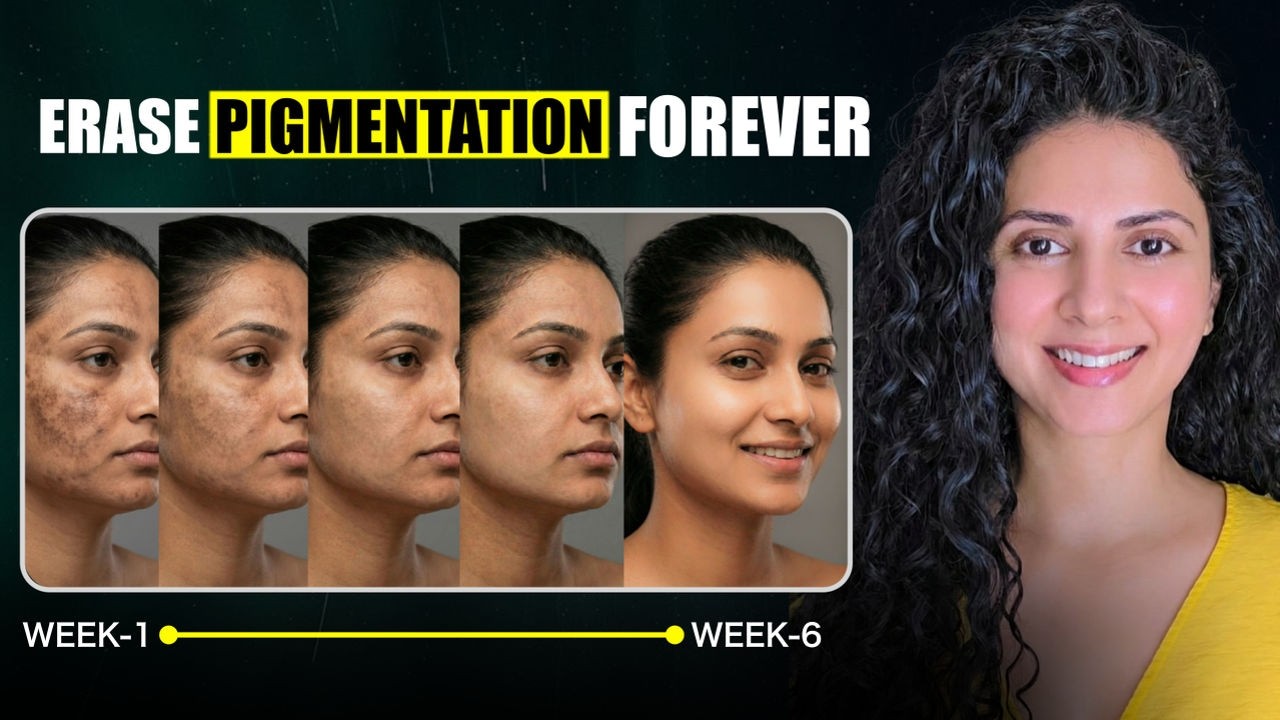
Daisy says stubborn pigmentation is not a surface problem, and shares seven Ayurvedic and everyday steps that work from inside and outside.
Key takeaways
- Daisy says peels, lasers and bleaches only treat the surface, so the dark patches return.
- She suggests morning or evening sun for 10 to 15 minutes and a four-month break from harsh skin products.
- She takes one fresh amla juice on an empty stomach each morning for vitamin C.
- Pranayama, mulethi water and moringa powder are her inside-out habits for hormones, blood and liver.
- Her only shop-bought product is a 5% niacinamide serum, sealed with shea butter or jojoba oil.
- Her face pack uses frankincense resin oil, not the essential oil.
- Pigmentation that is genetic or caused by age will not fade the same way.
Daisy's frankincense resin face pack
You need
- Frankincense resin oil or resin oil serum (not frankincense essential oil)
- Moringa seed oil
- Mulethi (licorice) powder
- A pinch of turmeric
- A few drops of lemon juice or lemon essential oil
- A little grated tomato juice
- For oily skin: sandalwood powder or Multani mitti
Method
- Mix the ingredients in amounts that suit your skin type. Daisy gives no fixed quantities.
- For oily skin, add sandalwood powder or Multani mitti to absorb excess oil.
- For dry skin, use more oil and skip the Multani mitti. Use only the mulethi powder and the rest.
- Apply once a day and leave it until it dries.
- Rinse off very gently and pat the skin dry.
On this page (6 sections)
Many people hide dark patches under makeup, avoid photographs and spend money on peels, lasers and bleaches. The relief is short and the patches return. Daisy compares these fixes to repainting a damp wall: the stain fades for a while, but the real problem sits deeper. She shares seven steps that she calls her “pigmentation insurance”, and she says they work from the inside and the outside.
Why pigmentation keeps coming back
Your skin gets its colour from melanin, made by cells called melanocytes. When they make too much melanin in certain spots, you see dark patches and uneven tone. That is hyperpigmentation.
Sun is a common trigger, but Daisy does not treat it as the enemy. In her words, “Sunlight isn’t your enemy. It’s your healer when it is used correctly.” She says the trouble is harsh midday sun between 9 am and 4 pm.
Her sun routine is simple:
- Take 10 to 15 minutes of sun on your arms, legs and face before 9 am or after 4 pm, with no sunscreen.
- If your pigmentation is severe, cover your face.
- If you must work in the afternoon sun, cover up with light clothing or a scarf.
- On very rare days of hours in strong sun, use a 100% mineral sunscreen.
Daisy says she has never used sunscreen. She also warns that some sunscreens, hair colours and harsh skin products can cause a chemical pigmentation called Riehl’s melanosis. Her fix is a four-month “chemical fast”. Stop bleaches and cosmetic products, wash with plain water, ubtan or rice flour, and take before and after photos.
What Daisy takes from the inside
Amla for vitamin C. Daisy says vitamin C and good hydration protect skin from sun, pollution and dust. She prefers eating it over applying it. Ayurveda calls amla a rasayana (a rejuvenator) and a rakta shodaka (a blood cleanser). She drinks the juice of one fresh amla each morning on an empty stomach, with a pinch of turmeric, pepper and ginger. She avoids milk, tea or coffee straight after. If fresh amla is hard to find, she points to amla powder. She also squeezes lemon on meals and drinks salted nimbu pani instead of sugary drinks.
Pranayama. Daisy calls breathwork the “master cure” for hormones and blood. She practises anulom vilom, brahmari, shitali, shitkari and kapalbhati on an empty stomach each morning. Start with 5 to 10 minutes of each, and begin kapalbhati with 3 minutes. She says to skip kapalbhati if you are pregnant, menstruating or have high BP, ulcers or hernia. She says to skip shitali and shitkari in winter or if you have asthma, a cold or low BP.
Mulethi (licorice). Daisy likes this root, also called yashtimadhu, because it contains glabridin. She says it blocks melanin production. She mixes 1 teaspoon of powder in warm water after meals, leaving a gap. She also boils it with jeera, saunf and ajwain, strains it and sips it through the day.
Moringa. She says a sluggish liver can show up as dull or pigmented skin, and moringa protects the liver. Her dose is one heaped tablespoon of moringa powder in water between breakfast and lunch, with lemon and pepper. You can also add it to sabzi or parathas.
Mahamanjishthadi kwath. This Ayurvedic decoction has manjishtha as its main herb. Daisy uses the Kottakkal brand. She says to take 10 to 15 ml twice a day before meals, or three tablets twice a day on an empty stomach. Check the dose with an Ayurvedic doctor first.
What Daisy applies on the skin
Niacinamide. This is the one shop-bought product she has used for years. She explains that it is not an acid, peel or bleach. It helps skin build ceramides and fats that strengthen the outer layer. Apply a 5% serum after washing your face at night, then seal it with shea butter or jojoba oil. Do a patch test on the neck first. She says the links in her description are not sponsored.
A frankincense resin face pack. Daisy says frankincense resin oil contains boswellic acids that block melanin. She stresses that the essential oil is not the same. She says it faded a deep scar on her face in three weeks. You can make resin oil at home or use a ready resin serum. Mix it with moringa seed oil, mulethi powder, turmeric, lemon and tomato juice, as in the recipe card above.
Why not alum? Daisy says alum tightens skin after shaving but is too drying and acidic for pigmentation.
When pigmentation needs more than home care
Daisy says hormones are a major cause, especially melasma. These are the butterfly-shaped patches across the cheeks. Pregnancy, birth control pills, thyroid issues and stress can all trigger it. Darker patches on the sides of the face and neck may be acanthosis, which she links to diabetes, insulin resistance, PCOD or weight. She says to see your doctor or gynaecologist for these and deal with the health issue alongside her steps. If you take medicine for this, keep your doctor in the loop.
She adds that her steps work only when nutrition and sleep are in order. Genetic and age-related pigmentation will not clear the same way.
What research says
The research covers only some of Daisy’s steps, and the studies are small or early. A lab study from 1998 found that glabridin, from licorice, reduced tyrosinase activity in B16 melanoma cells. Tyrosinase is the enzyme that makes melanin. In guinea pigs, it also lessened UVB-induced darkening. This was not tested in people, so it shows a possible mechanism and not a proven result for melasma.
For niacinamide, a small trial of 27 people with melasma compared 4% niacinamide with 4% hydroquinone on each side of the face for eight weeks. Both sides improved, and the colour difference was not statistically significant. All patients used sunscreen. Dermatologists at the American Academy of Dermatology do advise daily sun protection for melasma, including broad-spectrum SPF 30 or higher, so Daisy’s no-sunscreen approach differs from standard dermatology advice.
Ayurveda has used amla, moringa and frankincense for centuries. Studies of them for pigmentation in people are still limited.
Daisy’s tips
- Patch test any new serum or oil on your neck first.
- Do pranayama only on an empty stomach, and follow the cautions above.
- Wait before milk, tea or coffee after amla juice.
- Buy frankincense resin oil, not essential oil.
- Take before and after photos during the four-month break from harsh products.
- Be consistent and patient, because time to fade differs for everyone.
Daisy shows every step in the video above. It takes about 19 minutes.
Questions people ask
Can pigmentation be removed naturally?
Daisy says yes, if you treat the cause and stay consistent. She follows the steps in the video for decades and says the time to fade differs from person to person.
What is the difference between frankincense resin oil and essential oil?
Daisy says resin oil comes from the gum of the Boswellia tree and has boswellic acids. She says the essential oil does not have these properties, so buy resin-based oil.
Is alum good for pigmentation?
Daisy says no. She explains that alum is a drying astringent that can irritate pigmented skin and cause post-inflammatory pigmentation. She also says there is no proof that it reduces pigmentation.
How much mulethi should I take?
Daisy mixes 1 teaspoon of mulethi powder in warm water after meals, with a gap rather than straight after eating. If you take medicine for this, keep your doctor in the loop.
Which pigmentation will not fade with these steps?
Daisy says genetic pigmentation, such as V or W shaped dark patches under the eyes, is more permanent. She adds that pigmentation caused by age will not improve either.
Further reading
This article shares Daisy's personal experience and traditional Ayurvedic knowledge for general information. It is not medical advice. Talk to your doctor before changing medicines or treating a health condition, and patch-test anything new on your skin. Read the full disclaimer.
Watch Daisy explain it
The full video shows every step, in about 19 minutes.


