5 Effortless Weight Loss Habits With No Gym or Diet
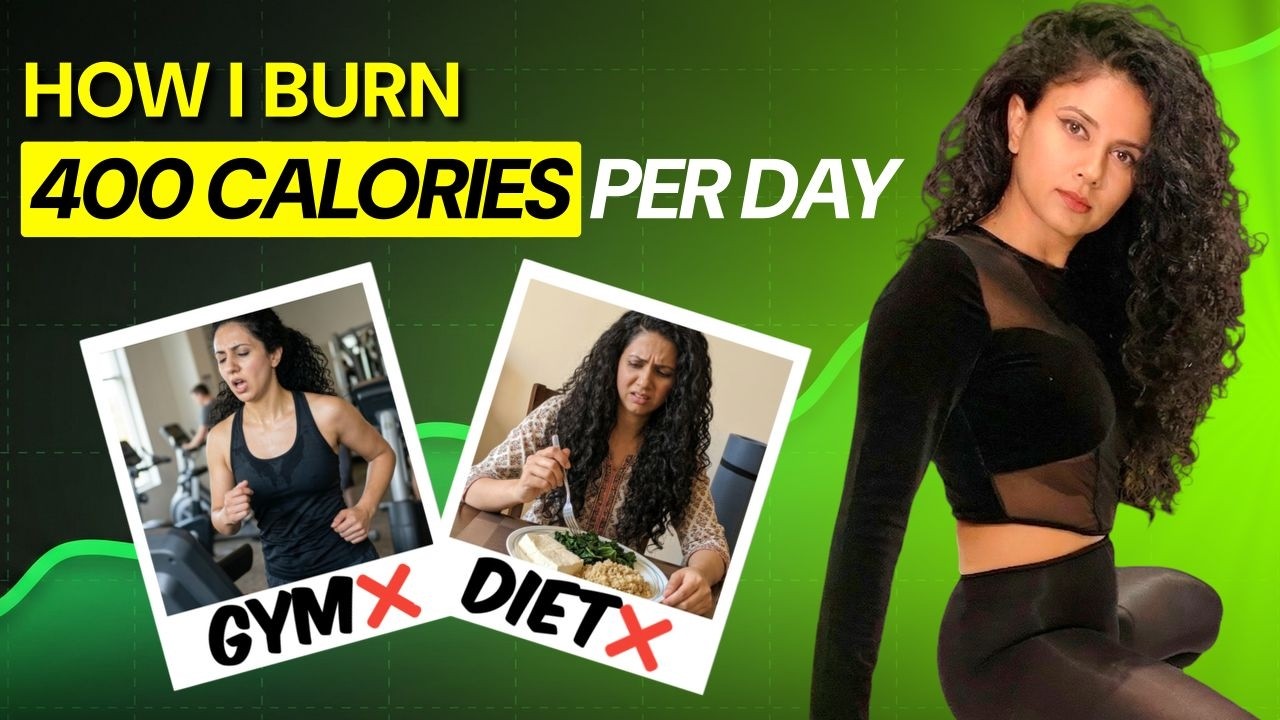
Prefer to watch? Open the full video on YouTube.
Daisy shares five small daily habits that she says make fat loss feel effortless, with no hard workouts, hunger or willpower needed.
Key takeaways
- Daisy says 70 to 80% of your daily calorie burn has nothing to do with workouts, so small everyday movement matters.
- She recommends spreading movement through the day, such as taking stairs and standing during calls.
- She suggests 15 minutes of kapalbhati breathing a day, which she says raises your resting metabolism.
- Eating at the same times every day helps your hunger hormones settle, she says, which reduces bloating.
- When a craving hits, she suggests a glass of water first and a 10-minute wait.
- She uses a smaller plate, sits on the floor and stops at about three-quarters full.
On this page (7 sections)
Most weight-loss advice asks for hard workouts and strict eating, and that is exactly why many people give up. Daisy says that conventional advice is built on a few myths. She now follows five small habits that need no extra time, no gym and no willpower. This page covers each one, in the order she shares them.
Habit 1: Move a little all day (NEAT)
Daisy begins with a myth. She says many people believe harder workouts burn more fat. In her words, 70 to 80% of your daily calorie burn has nothing to do with workouts.
She talks about NEAT, short for non-exercise activity thermogenesis. It means the calories you burn through everyday movement. Examples she gives are walking the dog, taking the stairs, standing during calls, cleaning the house, gardening and playing with your kids.
She says research shows lean people burn roughly 350 more calories a day than obese people through NEAT. She compares that to about an hour of jogging, or 40 minutes of tennis.
Her second point is about hard workouts. She says an intense session often leaves you tired, so you move less for the rest of the day, you eat more, and you crave carbs and sugar. She calls this compensatory behaviour and says research shows a 65% drop in daily movement after a workout. Small movements do not trigger this.
Her advice is to sprinkle movement through the day, not to bunch it together. Park a little further away and walk. Stand while you take calls.
Habit 2: Practise kapalbhati
Kapalbhati is a yoga breathing technique with quick, forceful exhales from the belly. Daisy says most people already know it but underestimate it.
She describes a study in which 15 minutes a day for 8 weeks reduced waist and hip measurements more than in people who did not practise it. She says the forceful belly contractions stimulate the gut, liver and breathing receptors. She also says kapalbhati raises your resting metabolic rate, so you burn more fat even at rest.
She adds that she believes about 80% of toxins leave through breathing out. She also notes that it is free.
Habit 3: Eat at fixed times
Daisy explains two hormones. Ghrelin is the hunger hormone, and leptin is the fullness hormone. She says these follow a pattern. When you eat at random times, they get confused, you feel hungry at odd hours, you overeat, and bloating follows.
Her fix is to pick your meal times and stick to them, whether you work a nine-to-five job or freelance. She says your body then works like a biological alarm: it reminds you that it is hungry at the same time every day. She says you also feel full on smaller portions, and she links it to less bloating and weight gain.
Habit 4: Use water the smart way
Daisy says your stomach has stretch receptors that tell your brain you are full. After you drink water, she says, that feeling lasts about 30 to 45 minutes. That is enough to skip a craving or delay a snack.
She also says what we often take for hunger is really thirst, especially when the mind is busy. Her routine is simple.
- Before you eat, drink a glass of water and wait 10 minutes.
- If the hunger goes away, you were thirsty.
- If it stays, eat something nourishing.
- Between meals, drink ginger tea, lemon water, tulsi water or cumin-infused water, with no sugar.
Habit 5: Eat mindfully from a smaller plate
Her last habit combines three small changes. She says a smaller plate tricks the brain into thinking it is having a full meal. She says the stomach is elastic and stretches, and we often eat until we are uncomfortably full, especially with tasty food.
She also suggests sitting on the floor to eat. She says very few Indians still do, but when you sit down, your stomach is physically squeezed, so you cannot overeat. She suggests stopping at about three-quarters full and eating with no phone or TV, because distraction stops the brain from registering fullness.
What research says
Daisy’s NEAT idea matches a well-known study. In a Mayo Clinic study of 16 volunteers who overate for 8 weeks, changes in NEAT explained a 10-fold difference in how much fat people stored. The people who moved more in daily life gained less fat. It was a small study, and it did not test the specific habits above.
On water, a 12-week trial of 48 adults aged 55 to 75 tested 500 ml of water before each meal, alongside a low-calorie diet. That group lost about 2 kg more. We could not find the kapalbhati study Daisy describes, so treat that claim as hers. The numbers on calories and movement after workouts are also hers.
Daisy’s tips
- Start today. These habits are free and need no equipment.
- Take a before photo and note your weight, then follow the habits for around 4 months and compare.
- Pick fixed meal times that suit your job and keep them.
- Drink water before a craving turns into a snack, and avoid sugar in the drinks between meals.
- Eat from a smaller plate, sit on the floor and put your phone away.
- If you want to work out, go ahead. Daisy says these habits help even when you cannot.
Daisy explains all five habits in the video above. It takes about 9 minutes.
Questions people ask
Can you lose weight without going to the gym?
Daisy says yes. She argues that most daily calorie burn comes from non-exercise movement, and that small habits like these compound. She still says to work out if you want to.
What is NEAT?
NEAT stands for non-exercise activity thermogenesis. It is the energy you burn through everyday movement such as walking, climbing stairs, cleaning and standing, not through planned workouts.
How does kapalbhati help with weight?
Daisy says the forceful belly contractions stimulate your gut, liver and breathing receptors and raise your resting metabolic rate. She suggests 15 minutes a day.
How do I know if I am hungry or just thirsty?
Daisy suggests drinking a glass of water and waiting 10 minutes. If the hunger goes away, you were thirsty. If it stays, eat something nourishing.
How long should I try these habits?
Daisy suggests checking your weight and taking a before picture, then following the habits for around 4 months before taking an after picture.
Further reading
This article shares Daisy's personal experience and traditional Ayurvedic knowledge for general information. It is not medical advice. Talk to your doctor before changing medicines or treating a health condition, and patch-test anything new on your skin. Read the full disclaimer.
Watch Daisy explain it
The full video shows every step, in about 9 minutes.